
How We Think About Money
I remember when I was growing up, my mom would do most of the grocery shopping, make daily meals, and run the household. It was “only one box of sugar cereal” at the store, making things last, and being smart with food planning. Then, every so often, my dad would decide he was going to cook and would come home with a few bags from the little grocery store down the street. It was way more expensive than the one my mom went to, and he would buy all the “fancy” stuff. Like the whole trip was for one meal, and in addition, we would get awesome cookies, different snacks, etc. I could always tell there was a bit of tension when these events happened, and while it seemed to be about food, I realized early on that it was also about money. Does this story conjure anything from your own past? It seems like a simple story. But it is a strong representation of how money works in our lives.
So. What comes to mind when you think of the word money? Any of these things?
Portfolio management. Behavioral finance. Status. Debt consolidation. Car lease. Wealth. Student loan. Anxiety. Estate planning. Withdrawal fees. Penny stocks. Insomnia. Insurance premiums. Membership fees. Power. Late charges. Mortgage rates. Taxes. Globalization. Poverty. Gratitude. Bull market. Bear market. Black Friday. Margin. Inflation. Minimum wage. Entitlement. Wall Street. Retirement. Happiness. Significance. Inheritance. Capital gains. Safety. Extreme Success. Two-parent working family. Budget. Over-extension. Depression. High blood pressure. Commission. Property tax. Clearance sale. Fund allocation. Get rich quick. Part time. Freedom. Overtime. Garage sale. Unemployment. Opportunity. Pyramid scheme. Golden parachute. Housing bubble. Competition. Ignorance. Fear. Birth. Life. Death. Income gap, rainy day funds, and Christmas presents.
It’s interesting. We live in a world where discussions on money are so often just financial in nature. Yet we know innately that it is also emotional, intellectual, and spiritual. We call them the four elements of money; and you will find pieces of each in the words above. Having the recognition that each of these elements working together provides significant value beyond the financial realm. With that said, there is more to the story.
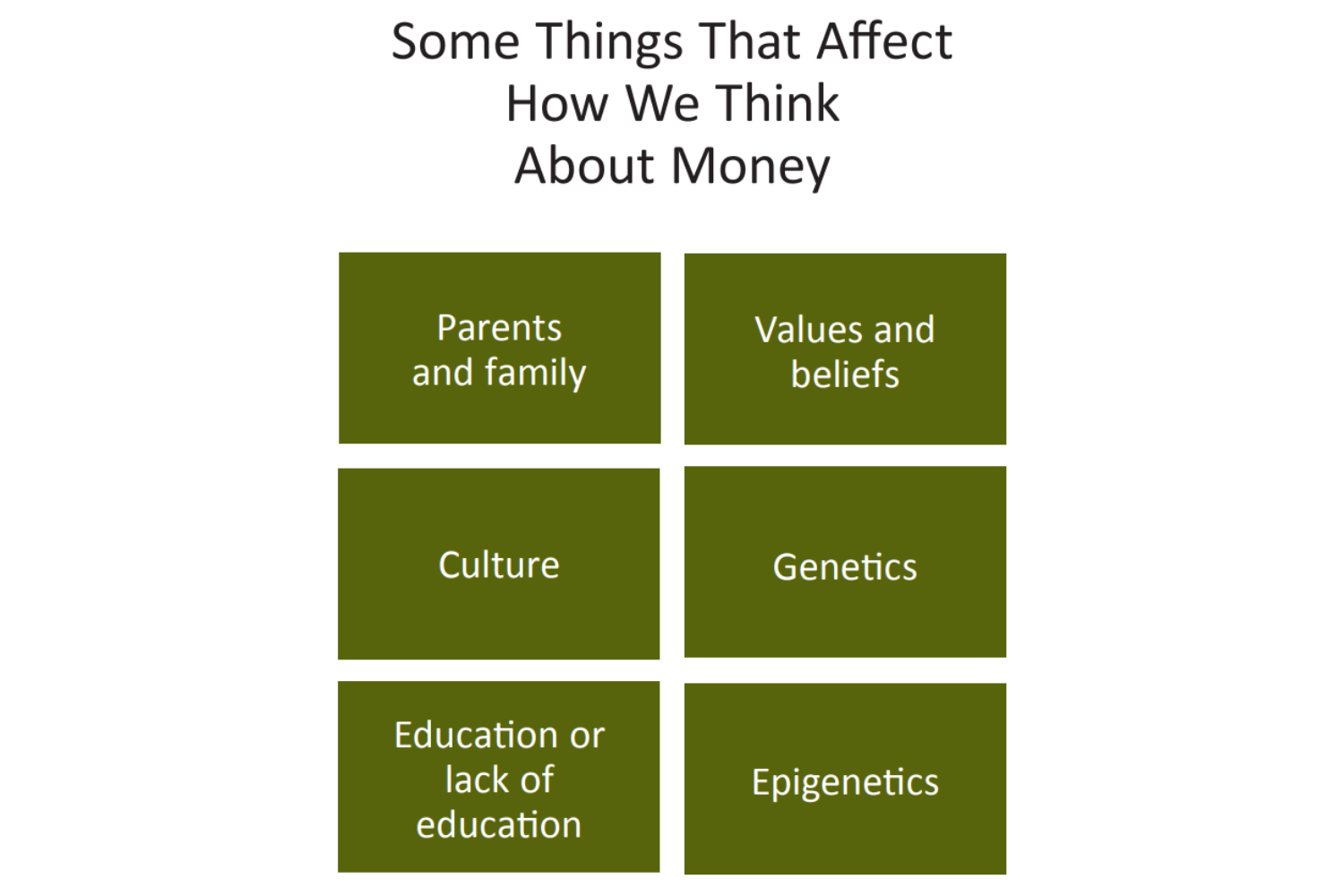
If someone asked you “How do you think about money?” what would you say? “I’m a spender”? “I like to save”? etc. Each of us is a culmination of many different things related to how money works in our lives. What we learned or didn’t learn in school. Our parents and other family members. Genetics. Epigenetics. Society. It is all these things working together that present us with where we are right now. The question is, are you satisfied in all areas?
How money works is a reflection not only of our elemental realms, but also the experiences that are unique to our lives. It is the study and experience we bring in both areas that we seek to share with the clients we work with, as we believe that money goes far beyond the latest news headlines or market numbers. It’s about being our best selves when we think about how we engage with money. How it affects us, how we use it, and how we pass it on. Just like most things in life, it takes practice, education, proactive work, and often even coaching. This is where we come in, as we seek to build a community seeking to engage at this level, gain a true understanding of how money works in our lives, and be as healthy in this area as we seek to be in all other parts of our lives.
Investing involves risk. No investment strategy can guarantee positive results. Loss, including loss of principal, may occur. Material discussed is meant to provide general information and it is not to be construed as specific investment, tax or legal advice. Keep in mind that current and historical facts may not be indicative of future results. Diversification is an investment strategy that can help manage risk within a portfolio, but it does not guarantee profits or protect against loss in declining markets.
This content is developed from sources believed to be providing accurate information. The information in this material is not intended as tax or legal advice. It may not be used for the purpose of avoiding any federal tax penalties. Please consult legal or tax professionals for specific information regarding your individual situation. The opinions expressed and material provided are for general information, and should not be considered a solicitation for the purchase or sale of any security. (C) Twenty Over Ten
